
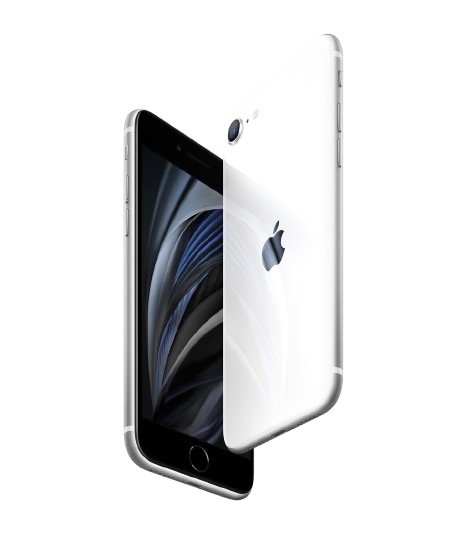
The iPhone SE (2nd generation) features a 4.7-inch Retina HD display, Touch ID, a 12MP Wide rear camera, wireless charging, and the A13 Bionic chip. Effective repair precise diagnosis and a service approach that matches the device’s hardware architecture.

Our technicians identify the exact source of the fault before beginning service, whether the issue is related to the display, battery, charging section, camera, audio system, network function, or internal board components. This method helps keep iPhone SE (2nd generation) repair in Doha accurate, efficient, and focused on the actual hardware condition of the device.
Structured Diagnostic Approach-First

Every repair starts with a complete diagnostic before any component is touched:
  • Display & touch response testing
  • Battery health & cycle analysis
  • Wired & wireless charging evaluation
  • Camera module inspection
  • Audio input & output testing
  • Logic board & power circuit diagnostics
Finding the root cause before opening the device is what separates a clean repair from a recurring one.

Camera Repair: Optical Accuracy & Image Sensor Recovery

The iPhone SE 2nd Generation runs a 12MP rear camera with OIS and phase-detection autofocus but exposed to the same mechanical and board-level vulnerabilities as any other device. The fault source can range from flex cable wear and sensor damage to board-level failure.
Issues We Resolve
  • Shaky or unstable footage with OIS active
  • Autofocus not engaging or hunting continuously
  • Camera app freezing or opening to a black screen
  • Rear lens scratched or dust visible behind the glass
  • Front camera producing dim or distorted output
  • Flash not firing or behaving inconsistently
Our Repair Process
  • Full module teardown and component-level assessment
  • Flex cable integrity and signal continuity checks
  • Module replacement using precision-grade parts where required
  • Optical alignment and stabilization calibration post-repair

Both cameras confirmed through live testing before the device is returned.

Display & Touchscreen Repair: Retina Panel & Touch Layer Restoration

The iPhone SE 2nd Generation uses a 4.7-inch Retina HD LCD display with True Tone and integrated touch layers. A direct impact can crack the glass, disrupt touch accuracy, or affect backlight performance.
Issues We Resolve
  • Cracked or shattered front glass
  • Dead zones, dark patches, or vertical lines
  • Backlight flickering or uneven brightness
  • Touch input unresponsive or registering incorrectly
  • True Tone not functioning after screen damage
Our Repair Process
  • Full display assembly replaced using precision tooling
  • True Tone profile transferred and touch layers recalibrated
  • Brightness uniformity and color accuracy verified
  • Touch response and latency tested post-installation

Home Button & Touch ID Repair: Fingerprint Sensor Restoration

The iPhone SE 2nd Generation home button is hardware-paired to the logic board, tying Touch ID directly to the device. Any disruption to this system affects unlock, Apple Pay, and navigation all at once.
Issues We Resolve
  • Home button physically stuck or unresponsive
  • Touch ID failing to read fingerprints reliably
  • Fingerprint sensor inactive after a display repair
  • Button click feel lost or degraded after impact
  • Touch ID greyed out in device settings
Our Repair Process
  • Button assembly and flex cable inspected for damage
  • Sensor pairing verified against the device logic board
  • Assembly replaced only where hardware failure is confirmed
  • Touch ID re-enrolled and response tested post-repair

Battery Replacement & Power Management Repair

The iPhone SE 2nd Generation supports both wired and wireless charging. Cell degradation, charging IC faults, or coil damage can each affect device reliability differently over time.

Issues We Resolve
  • Battery draining quickly
  • Device shutting down before reaching low charge
  • Overheating during wired or wireless charging
  • Wireless charging not initiating or cutting out
  • Battery health dropping rapidly
Our Repair Process
  • Battery health and cycle count diagnostics
  • Safe battery replacement with compatible cell
  • Wireless charging coil and circuit inspection
  • Power calibration and runtime testing post-replacement

Microphone & Audio Input Repair

The iPhone SE 2nd Generation microphone system covers call audio, video capture, and voice input for Siri. Dust accumulation, liquid ingress, or damaged flex connections are the most common causes of input failure on this device.

Issues We Resolve
  • Caller unable to hear clearly during calls
  • Voice input muffled or cutting in and out
  • Microphone inactive during video recording
  • Siri not responding to voice commands
  • Background noise not filtered during calls
Our Repair Process
  • Each microphone tested individually for input clarity
  • Flex cable and connector inspected for damage
  • Port cleaned and cleared of debris where blocked
  • Component replaced where hardware failure is confirmed
  • Microphones verified post-repair under real conditions

Speaker & Audio Output Repair

The iPhone SE (2nd generation) supports stereo audio playback, with sound output handled through its built-in speaker system. Overtime, it can degrade from dust blockage, liquid damage, or physical impact.

Issues We Resolve
  • No audio from speaker or earpiece
  • Muffled or unclear sound output
  • Crackling or rattling at high volumes
  • Earpiece silent during calls
  • Audio cutting out intermittently
Our Repair Process
  • Speaker grille cleared of dust and debris
  • Flex cable and connector continuity checked
  • Module replaced where failure is confirmed
  • Output verified post-repair

Network & Signal Repair

The iPhone SE (2nd generation) relies on its internal antenna assembly and cellular hardware to maintain stable LTE connectivity. Signal-related faults can develop from antenna damage, SIM reader problems, or defects within the board-level radio frequency section.
Issues We Address
  • Weak or unstable network reception
  • Calls not connecting properly or disconnecting unexpectedly
  • SIM card not recognized or device showing no service
  • Mobile data failing even when signal bars are visible
  • Signal loss following liquid damage or physical impact
Our Repair Procedure
  • Inspect antenna lines and connection points
  • Test the SIM tray and SIM reader function
  • Check RF-related circuits at board level
  • Perform live signal, data, and call testing after repair

Charging Port & Connectivity Repair

The iPhone SE (2nd generation) supports wired charging and data transfer through its Lightning connector, and it also works with Qi wireless chargers. Problems in this area can develop from port wear, trapped debris, liquid exposure, or internal connector damage, and either wired charging or wireless charging may be affected separately.

Issues We Address
  • Device not charging through cable or wireless charger
  • Charging cable fitting loosely or disconnecting easily
  • Computer not detecting the device for data transfer
  • Accessory compatibility warnings appearing on screen
  • Charging port showing corrosion or physical damage

Bluetooth & Wireless Connectivity Repair

The iPhone SE (2nd generation) supports Bluetooth 5.0 and Wi-Fi 6 (802.11ax) with 2×2 MIMO as part of its cellular and wireless system. Wireless faults may be related to antenna lines, internal board-level circuitry, or software-level disruption that affects pairing and network stability.

Issues We Address
  • Bluetooth not turning on or appearing unavailable
  • Devices failing to pair or disconnecting during use
  • Audio interruptions while using wireless accessories
  • Wi-Fi not detecting nearby networks
  • Weak or unstable wireless connection
Our Repair Process
  • Inspect wireless lines and antenna connections
  • Carry out board-level diagnostics where required
  • Check for software or firmware-related conflicts
  • Replace affected components if necessary
  • Test Bluetooth pairing and Wi-Fi stability after repair

Liquid Damage Repair: Corrosion Inspection & Hardware Recovery

The iPhone SE (2nd generation) is rated IP67 for splash and water resistance, but internal liquid exposure can still lead to corrosion across connectors, components, and board-level circuits. Early assessment helps identify the affected sections quickly and supports a more effective recovery process.
What We Perform
  • Full device disassembly and damage assessment
  • Ultrasonic cleaning of affected components
  • Corrosion removal from board and connectors
  • Component-level drying and treatment
  • System-wide functionality testing post-recovery

Logic Board & Chip Repair

The iPhone SE (2nd generation) is built around Apple’s A13 Bionic chip and supporting internal control circuits that manage power, processing, and core device functions. When faults develop at board level, repair work has to focus on detailed circuit diagnosis and component-level correction rather than standard external part replacement.
Issues We Address
  • Device not powering on
  • Random restarting or freezing during use
  • Touch ID affected by internal hardware faults
  • No display output even when the phone shows signs of power
  • Overheating linked to internal power-related faults
  • Data recovery support from physically damaged boards

Rear Housing & Frame Repair: Back Glass and Structural Restoration

The iPhone SE (2nd generation) features a glass rear panel that supports wireless charging and forms part of the device’s external structure. Damage to the back glass can affect the phone’s finish, expose internal areas to further risk, and make the device unsafe or uncomfortable to handle.

Issues We Fix
  • Cracked or shattered back glass
  • Chipped rear glass edges
  • Loose glass pieces on the back panel
  • Back surface damage after impact or drop
  • Rear panel separation affecting the device finish
  • Cosmetic rear glass damage with sharp or uneven areas
Our Repair Process
  • Inspect the rear panel and frame condition
  • Check for related housing or edge damage
  • Remove the damaged back glass carefully
  • Clean the surface and prepare the rear section properly
  • Fit the replacement back glass with correct alignment

Overheating Diagnosis: Thermal System Evaluation

Overheating may result from excessive load, battery faults, or hardware inefficiencies. Thermal analysis helps determine the underlying cause.

Data Safety Protocol

Device storage remains protected wherever possible. Backup is recommended prior to service.

Post-Repair Quality Assurance

Every device undergoes:

Full functional testing

Sensor verification

Connectivity checks

Camera and audio testing

Thermal monitoring

This ensures reliable operation before return.
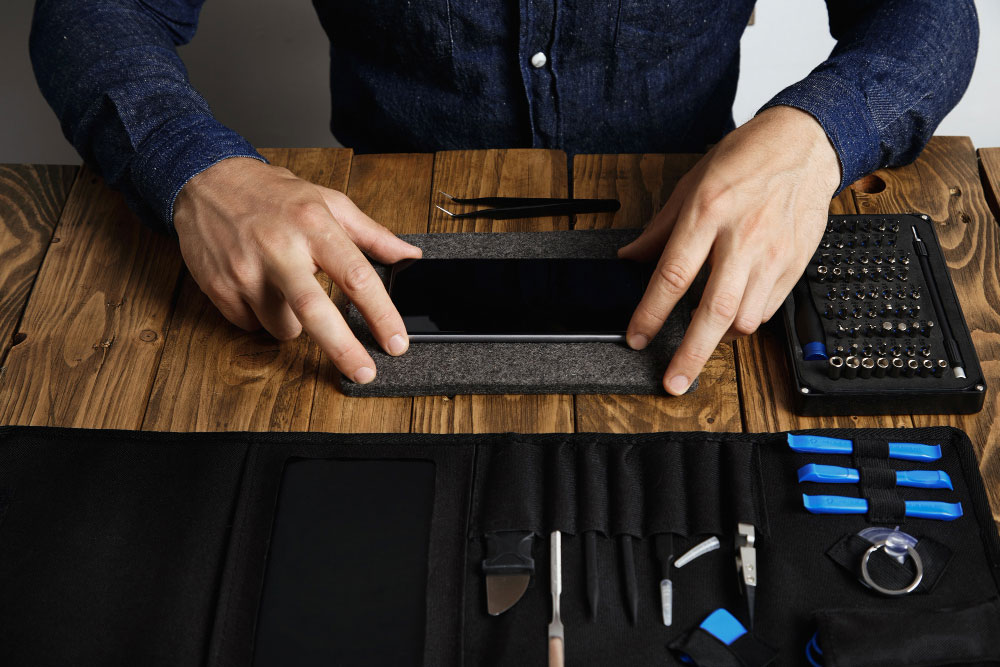
Expert repairing iPhone minor issues at professional mobile phone service center

Why Expert Repair Matters for Newer Devices

Modern smartphones integrate tightly coupled hardware and software systems. Improper repair can lead to:

Sensor calibration loss

Reduced performance

Battery safety risks

Long-term reliability issues

Precision repair preserves device longevity and functionality.

Frequently Asked Questions

1. How do you figure out what’s actually wrong with my iPhone before repairing it?
We start with a structured diagnostic process that checks hardware integrity, battery condition, thermal behavior, sensors, charging circuits, and software. This helps us identify the root cause instead of guessing based on symptoms. Once the issue is confirmed, we explain the findings and proceed with the appropriate repair.
Repairs are carried out in a way that preserves device storage wherever possible. Since some faults, especially power or logic board issues, can carry risk, we recommend backing up your data beforehand as a precaution. Our process is designed to minimize any impact on your information.
We handle a wide range of issues, including screen damage, battery problems, charging faults, camera issues, microphone or speaker problems, network and connectivity faults, overheating, water damage, and complex logic board repairs. If the problem isn’t obvious, our diagnostic process helps identify uncommon faults as well.

Yes. During diagnostics, we evaluate the device as a whole, since problems can sometimes be connected, for example, power issues affecting performance or connectivity. This approach helps ensure that underlying faults are identified and addressed rather than fixing only one symptom.

After completing the repair, the device goes through functional testing that includes checking sensors, connectivity, camera, audio, charging, and thermal behavior. This verification step helps confirm that the repair has restored stable operation before the device is returned.

What do I get from my iPhone Repair?

Call Us for Apple Door Step Support

We provide a door step service for your iPhone repair and service at dhoa, so no matter where you are, there is no excuse to not choose Apple Service and Repairs Center Way To Fix iphone repair service in qatar

100% Quality Parts

Our parts are of the highest quality and this allows us to offer you a limited warranty on the device for all parts, except the battery

No Minimum Services Charges

Diagnosis of your device is absolutely free of cost and there are no hidden charges whatsoever, for door step service contact us to get your device fixed.

Apple Premium service Centre

Apple Service and Repairs Center Way To Fix is the fastest and the best rated service provider for all Apple Service in Doha and Qatar. Select the device and the issue you wish to get repaired and watch how we bring your device back to life!

×